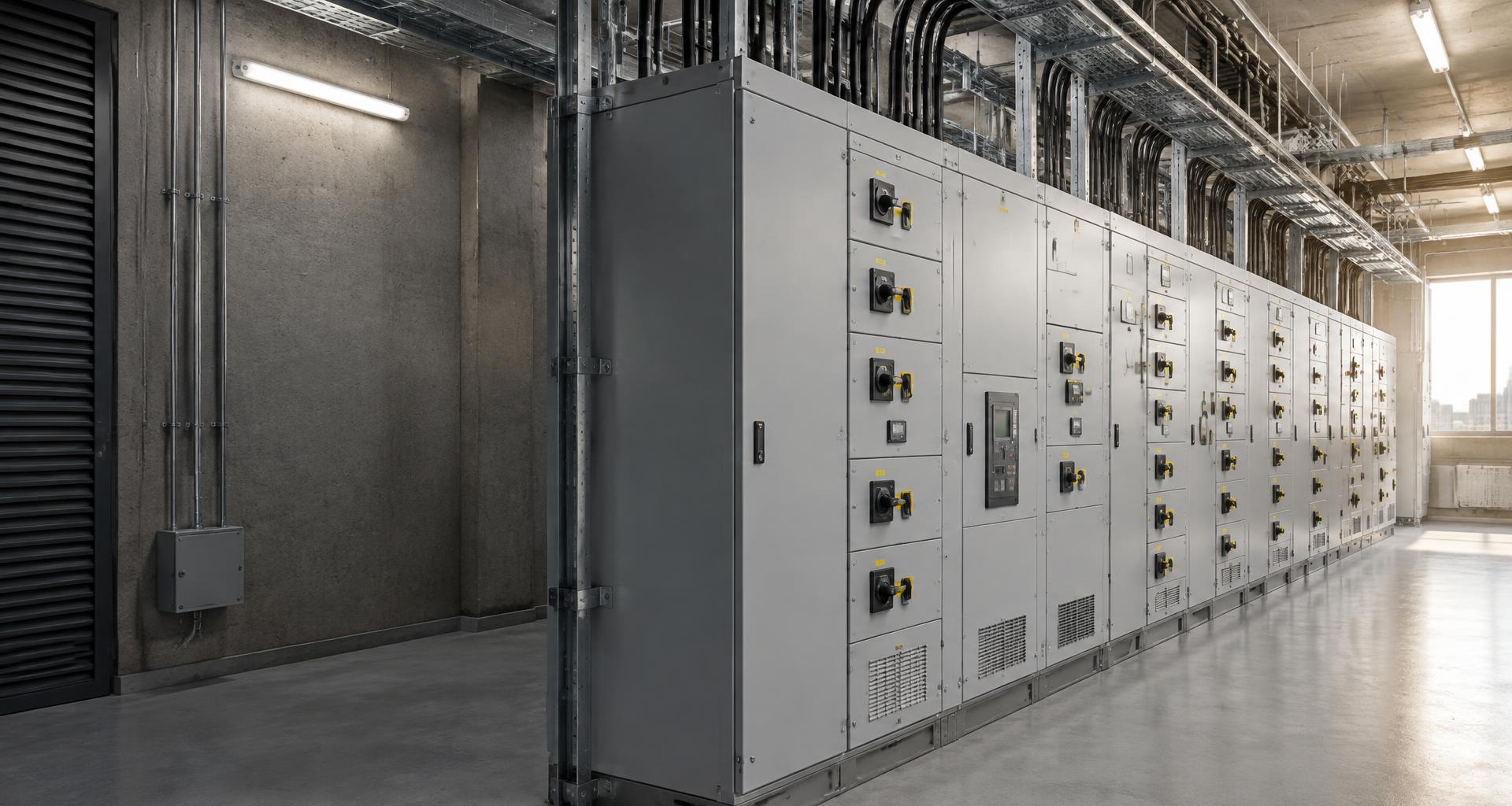
Emergency Electrician Near: what to do first when a commercial electrical fault occurs
If you are searching for emergency electrician near, start with safety before arranging attendance. Where there is smoke, burning, arcing, exposed live parts, water near electrical equipment or an injured person, keep people away and contact the emergency services. Damage to the incoming supply cable, meter position or street equipment is the responsibility of the network operator, who should be contacted directly through the national power-cut number 105. Do not open distribution boards, reset devices repeatedly or attempt to bypass protection to restore power. These steps protect people and preserve the evidence needed to find the cause.
Once the area is safe, note what has stopped working, which protective device operated and what was happening at the time. A single tripped circuit, a lost phase affecting three-phase plant and a complete loss of supply to London premises point to different investigations. Photographs taken from a safe distance, the board reference and any alarm or fault codes help the electrician prepare. Tell us which loads are business critical, such as refrigeration, security systems, lifts, servers or production equipment, so priorities can be discussed when the request is reviewed.
Requesting urgent electrical attendance in London
Use the booking link to send the site address, postcode, a contact who can grant access and a concise description of the fault. Attendance times and out-of-hours availability are not guaranteed by this page; they are confirmed only after the request has been reviewed against current commitments. Include access restrictions, such as landlord permission, alarm codes, permits or loading-bay arrangements. If the building has a facilities manager or managing agent, tell them that an electrical request has been raised so the attending electrician can reach plant rooms and riser cupboards.
Urgent work normally begins with making the installation safe rather than a full repair. That can mean isolating a damaged circuit, identifying the failed component and confirming which parts of the premises can be safely re-energised. Permanent repairs may need replacement parts, a planned shutdown or agreement from the person responsible for the installation. The record left after attendance should state what was isolated, what was found, what remains outstanding and any limitations on use, so that a temporary arrangement is not mistaken for a completed repair.
Reducing repeat callouts after an emergency in London
Many urgent faults have causes that develop over time: loose terminations, overloaded circuits, water ingress, deteriorating cables or protective devices that no longer suit the load. After the immediate fault is resolved, consider whether a targeted inspection, thermographic survey or periodic inspection report would identify similar risks elsewhere. Reviewing the circuit schedule and recent changes to equipment can show whether new loads have been added without checking capacity. Planned maintenance cannot remove every failure, but it reduces the chance that a known defect interrupts the business at an inconvenient time.
Planning emergency electrician near around an occupied building
Commercial premises usually need to keep operating while electrical work is carried out. Identify essential loads, normal operating hours and any landlord or permit requirements early. If work areas need to be separated from staff or customers, agree how that will be done and who will communicate planned interruptions. Generators, UPS systems and automatic restart functions should be identified so that isolation is planned against the complete supply arrangement. Out-of-hours work is subject to confirmation once scope and access have been reviewed.
Emergency Electrician Near: scope and site requirements
Emergency Electrician Near in London concerns the fixed installation and connected building services. The starting point is the specific requirement at your premises, whether that is a new installation, a change to an existing system or an issue affecting operation. The service name identifies the subject, but equipment details and site conditions determine the work required. A useful proposal explains what is included, what needs further investigation and which interfaces belong to another specialist. That distinction helps avoid an apparently simple task becoming an unplanned interruption to the wider building.
Technical considerations for emergency electrician near
The assessment of the fixed installation and connected building services should reflect its actual configuration and operating environment. The following considerations help define what needs to be reviewed and which evidence is useful before decisions are made.
Commercial electrical infrastructure
Commercial electrical projects need a clear description of the intended building use and the existing installation. Supply capacity, circuit arrangement, equipment condition and the available records help establish the starting point. A fit-out or refurbishment can change demand and access requirements even where the incoming supply remains unchanged. Existing equipment should not be assumed suitable solely because it has operated previously. A defined assessment identifies what can be retained, what requires verification and what depends on further investigation.
Compatibility, protection and operating conditions
The proposed scope should coordinate circuit protection, wiring routes, isolation and the requirements of connected equipment. Other trades, landlord responsibilities and essential services can affect the sequence of work. Design decisions need to reflect the actual environment and intended loads rather than a generic specification. Changes made in one area may affect distribution or maintenance elsewhere, so the limits of the project and its interfaces with the wider building need to remain clear.
Information that supports a sound decision
Drawings, schedules, equipment data and previous inspection records provide useful context. Where records are incomplete, state which assumptions require checking before work is authorised. Handover should identify the work completed, the verification undertaken and any remaining limitations. A clear documented scope helps the building manager compare proposals and plan future alterations without treating an isolated improvement as confirmation of the condition of the whole premises.
Planning tasks and tracking outstanding defects
Emergency Electrician Near is most useful when it follows the site’s asset history and operating conditions. Identify the equipment included, previous findings, essential supplies and the consequence of an unexpected interruption. The agreed tasks should suit each asset rather than rely on a single checklist for every building. Routine observations, measurements, intrusive inspection and repair are different activities, and their inclusion should be explicit. Manufacturer information and changes in usage can affect the appropriate scope and the need for further assessment.
A maintenance visit should produce an understandable record of completed tasks, defects and access limitations. Items needing corrective work should have a clear next action rather than disappear into an undifferentiated list. If a repair requires a shutdown, replacement parts or another specialist, those dependencies should be identified before dates are agreed. Recurring defects deserve review of the underlying cause. Maintenance can help manage deterioration and risk, but it should not be presented as a guarantee that equipment cannot fail between visits.
Access, isolation and business continuity
Planning emergency electrician near involves the people using the building as well as the equipment itself. Provide the site postcode, building use, normal operating hours and the person who can authorise access. Identify landlord-controlled areas, shared distribution points and any existing permit requirements. If the premises remain occupied, agree how work areas will be separated and how affected users will be informed. Deliveries, parking restrictions and movement of materials can influence the programme, but these arrangements should be confirmed for your actual location rather than assumed from a London address.
Isolation must be assessed against the complete supply arrangement. Generators, uninterruptible power supplies, remote controls and automatic restart functions can introduce sources or commands that are not obvious from a local switch. Essential loads and equipment needing a controlled shutdown should be identified by the site team. A planned interruption should include the method of returning systems to service and the relevant functional checks. Do not assume that an out-of-hours slot or uninterrupted operation is available until the scope, access and operating constraints have been reviewed.
Records, limitations and the next step
For emergency electrician near, a useful handover explains what was done and what the evidence establishes. Circuit identification, component references, drawings and relevant results should be linked to the agreed task. The proposed record depends on the work: installation verification, periodic inspection, diagnostic findings and maintenance observations serve different purposes. Ask which documentation is included before authorising work. Any inaccessible area, incomplete test or dependency on another contractor should remain explicit, so that a completed local task is not mistaken for verification of every system in the building.
To request a booking, include equipment identification, the site location and a concise description of the requirement. Photographs can help where they can be taken without opening equipment or approaching a hazard. Existing schedules, inspection reports and manufacturer data are useful supporting material. The request is a starting point for agreeing scope and availability, not a confirmed appointment or fixed quotation. A clear account of what you need allows the next discussion to focus on practical access, evidence, responsibilities and the proposed outcome.